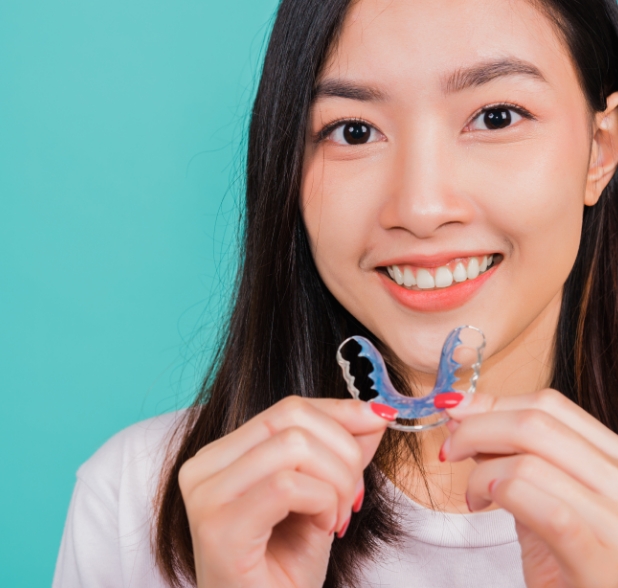
Snoring is more than just a nighttime nuisance; it can signal underlying health issues such as obstructive sleep apnea (OSA). If you’re wondering, "Can a dental appliance stop snoring?" The answer is yes—in many cases. At Cranbrook Dentist, we offer innovative solutions like oral appliance therapy to help adults breathe and sleep better.
Snoring happens when airflow is partially blocked during sleep, causing throat tissues to vibrate. This blockage is often due to relaxed muscles, enlarged tonsils, or the position of the tongue.
Sleep apnea is a serious condition where breathing repeatedly stops during sleep. Snoring is a common symptom, especially in obstructive sleep apnea. Left untreated, it can lead to high blood pressure, heart disease, and daytime fatigue.
Dentists are uniquely positioned to identify airway obstructions related to jaw alignment and oral structures. At Cranbrook Dentist, we offer customized oral appliances to gently reposition the jaw and tongue, improving airflow and reducing snoring.
A dental appliance, also called a mandibular advancement device (MAD), gently moves your lower jaw forward during sleep. This helps open the airway and prevents the soft tissues in your throat from collapsing.
Adults with mild to moderate sleep apnea, or those intolerant of CPAP machines, often benefit most. Patients who travel frequently or have dental concerns may also prefer oral appliances.
Research shows that oral appliances reduce snoring and mild to moderate sleep apnea symptoms in most patients. Studies confirm improved oxygen levels, sleep quality, and reduced daytime drowsiness.
While CPAP is considered the gold standard for severe apnea, oral appliances offer nearly equal results for mild to moderate cases, with greater comfort and better compliance.
Patients at Cranbrook Dentist report significant snoring reduction, better sleep, and even improved relationships. One local patient noted, “I haven't snored in weeks, and my partner is finally sleeping too!"
Oral appliances are pocket-sized, making them ideal for frequent travelers.
Studies show similar outcomes between CPAP and dental appliances for mild/moderate cases, making the latter a strong alternative.
Because they're easier to use and more comfortable, oral appliances often achieve better long-term compliance than CPAP devices.
At Cranbrook Dentist, we use 3D imaging and impressions to craft your appliance, ensuring a precise fit. Adjustable features allow fine-tuning for optimal comfort and effectiveness.
Made from medical-grade resins, the appliance is lightweight and smooth, ensuring a comfortable experience.
Initial soreness or excess saliva are common but temporary. Our team offers guidance and adjustments to help your mouth adapt.
We assess your medical and dental history and may recommend a home sleep test or refer you to a sleep specialist.
Once fabricated, we ensure the appliance fits well and adjust as needed. Regular follow-ups track your progress.
Coverage depends on whether the appliance is prescribed to treat a medical condition like sleep apnea. If so, it's typically classified as a medical device.
MSP doesn't usually cover dental appliances, but many extended health plans do. Check with your provider for specific details.
We offer flexible payment plans and can assist with paperwork to help you maximize your benefits.
Some patients may experience jaw soreness or bite changes. Our follow-ups help detect and address issues early.
Minor discomfort can often be resolved by adjusting the appliance. Our dental team ensures your device is fine-tuned for comfort and results.
Routine checkups help maintain the appliance's fit and effectiveness, and ensure oral health stays optimal.
Use a soft brush and mild soap (no toothpaste) to clean the appliance each morning. Rinse thoroughly.
Store in a ventilated case. When traveling, keep it in your carry-on and avoid exposing it to extreme heat.
Most appliances last 3-5 years with proper care. Contact us if you notice wear or reduced effectiveness.
Contact Cranbrook Dentist today to schedule your evaluation. Our friendly team is here to guide you through every step. Ready to sleep better? visit https://cranbrookdentist.ca to book your consultation. Our experts will help you determine if a snoring appliance is right for you.
A dental appliance could be your key to peaceful sleep and better health. Don’t wait—take the first step toward better breathing tonight.
Q: Can a dental appliance replace a CPAP?
A: In many mild to moderate cases, yes. Dental appliances offer similar effectiveness with improved comfort.
Q: How long will it take to adjust to the appliance?
A: Most patients adapt within a week or two.
Q: Are dental appliances covered by dental insurance?
A: They may be, especially when prescribed for sleep apnea. Check with your provider.
Q: Is there a connection between snoring and the need for certain dental restorations like crowns?
A: Yes. Improper bite alignment or missing teeth (which may require crowns) can affect your airway. Ask us about crown types of teeth during your evaluation.
Q: Will using a dental appliance affect my speech?
A: Initially, some patients may notice slight speech changes, but these typically disappear as you get used to the device.
Q: Can I wear the appliance if I have missing teeth or dental work like bridges or crowns?
A: Yes. The appliance can often be customized to accommodate existing dental work, including various crown types of teeth restorations.
Q: How do I know if the appliance is working?
A: Improvements in sleep quality, reduced snoring, and increased energy are good signs. Follow-ups and sleep studies may also help confirm effectiveness.
Q: What happens if I grind my teeth at night?
A: Some oral appliances double as nightguards, helping to protect your teeth from grinding while treating snoring.